
Huawei Promoting A new World Agenda

A new world is coming – and it’s circular

Huawei: We are strengthening European resilience by creating new jobs and the 5G ecosystem.

By ABRAHAM LIU, CHIEF REPRESENTATIVE OF HUAWEI TO THE EU INSTITUTIONS

Abraham Liu, chief representative of Huawei to the EU institutions | Huawei

Just over two months ago, in the splendid surroundings of the Concert Noble in the heart of Brussels, I hosted Huawei’s New Year Reception to celebrate the past year and look forward to the coming one. It was an optimistic occasion, themed around the anniversary of our 20 years in Europe this year, building on the trust that we have been shown by our partners and customers in the past two decades. We connected with hundreds of old friends and made new ones. It seems a long time ago now — it might as well have been two years not two months, so much has changed since then.

We could not have imagined that in a matter of weeks we would not be able to go to our offices, to take our children to school, to travel, to spend precious time with our friends and loved ones, or to comfort them when they became sick. Or, most heartbreaking of all for far too many of us, to hold their hand as they took their last breath. But this is where we are now, in Europe and across the world.

Economies are going to need to get going again fast, so that truly no one is left behind.

We are told this is the “new normal”.  Regrettably, this is true for now. Some of this will last a long time, some of it will be less permanent. What hasn’t changed, though, is the sentiment I expressed that evening to our guests in Brussels — our commitment to Europe — now more than ever.

When we eventually get through this — and we will get through this together — economies are going to need to get going again fast, so that truly no one is left behind, and so that the inevitable job losses are minimized.

It’s the duty of global companies like Huawei to help the process of regeneration and renewal as well.

Just last week, European Commission President Ursula von der Leyen said Europe “will need a massive investment to jumpstart our economies”. And there is talk of a new “Marshall Plan for Europe”. This is clearly something that governments will need to work out together, but I firmly believe it’s the duty of global companies like Huawei to help the process of regeneration and renewal as well. We can help and we want to help.

Many people across Europe — just like in China — will have lost their jobs; there will be many people having to start all over again — and we need them to have the best connectivity and digital tools available. More than that, we need them to have job opportunities and prospects. We may go in and out of lockdowns and restrictions for a very long time, the path is not going to be a short or a straight one. That is why, for me, it’s really important to stress that we are increasing our commitment to Europe in these difficult times. We will be creating more jobs for Europeans. For example, on that evening of our spring reception I announced our plans to build a factory to make 5G equipment here in Europe — 5G for Europe made in Europe — and we are continuing our search for talented people to join us across the Continent.

The coronavirus pandemic has exposed the big differences in connectivity and digital economies around the world, including Europe. For many children, education has been severely interrupted, and many do not have the ability to continue it online — this will only add to inequalities in the future unless we can close this digital gap in opportunity for our young people. This highlights the need to move fast after this period with investment in new connectivity solutions like 5G.

Governments will have lots of debt, so things will be difficult. New businesses will need to be started and grow. There will be new ways of doing things. Jobs will need to be created — and governments will know that, in 2020 and beyond, there is no better way to create social and economic value than investing in a robust model that is both green and digital. It might prove difficult for some little stores to re-open their premises after a few months in lockdown, for example, but if they have access to a digital ecosystem that allows them to at least continue some of their business, it could be a game changer not only for the company itself and for its employees, but also for the European economic model, which itself is made of many parts. These parts — in the form of SMEs — create immense value for society as a whole. Technology does not exist in a vacuum, it is just a tool for humans.

Let’s use this time to create a European example of the circular economy.

If I can even allow some optimism, this could be a time when we can look at how we do things better in the future. A time to re-evaluate the mechanisms and structures of our societies. If we are having to redesign our economies, then let’s work to make them more efficient, less wasteful, with more sustainable products and more opportunities for all. Let’s use this time to create a European example of the circular economy. A model for a new world of business. A more resilient Europe. A ready-to-lead European Union. President von der Leyen said this is the moment “to put behind us the old divisions, disputes and recriminations. The moment to be ready for that new world”.

That moment is coming. It may seem a long way off now, as we sit confined to our homes, but it is coming. And if we learn to trust one another, to help one another, and to learn from one another, Europe — and the world — can be a safer and more equal place. And that moment will come quicker than we think.
What Vaccine Means in Real World

What is a vaccine?

A vaccine is a type of treatment aimed at stimulating the body’s immune system to fight against infectious pathogens, like bacteria and viruses. They are, according to the World Health Organization, “one of the most effective ways to prevent diseases.”

The human body is particularly resilient to disease, having evolved a natural defense system against nasty disease-causing microorganisms like bacteria and viruses. The defense system — our immune system — is composed of different types of white blood cells that can detect and destroy foreign invaders. Some gobble up bacteria, some produce antibodies which can tell the body what to destroy and take out the germs, and other cells memorize what the invaders look like, so the body can respond quickly if they invade again.

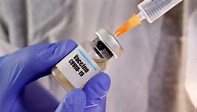
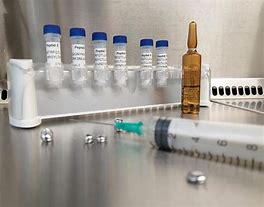
Covid 19 trial vaccine

Vaccines are a really clever fake-out. They make the body think it’s infected so it stimulates this immune response. For instance, the measles vaccine tricks the body into thinking it has measles. When you are vaccinated for measles, your body generates a record of the measles virus. If you come into contact with it in the future, the body’s immune system is primed and ready to beat it back before you can get sick.

The very first vaccine was developed by a scientist named Edward Jenner in the late 18th century. In a famous experiment, Jenner scraped pus from a milkmaid with cowpox — a type of virus that causes disease mostly in cows and is very similar to the smallpox virus — and introduced the pus into a young boy. The young boy became a little ill and had a mild case of cowpox. Later, Jenner inoculated the boy with smallpox, but he didn’t get sick. Jenner’s first injection of cowpox pus trained the boy’s body to recognize the cowpox virus and, because it’s so similar to smallpox, the young man was able to fight it off and not get sick.

Vaccines have come an incredibly long way since 1796. Scientists certainly don’t inject pus from patients into other patients, and vaccines must abide by strict safety regulations, multiple rounds of clinical testing and strong governmental guidelines before they can be adopted for widespread use. See the emptiness as coronavirus closes landmarks, stadiums, amusement parks58 PHOTOS

What’s in a vaccine?

Vaccines contain a handful of different ingredients depending on their type and how they aim to generate an immune response. However, there’s some commonality between them all. Fighting coronavirus: COVID-19 tests, vaccine research, masks, ventilators and more29 PHOTOS

The most important ingredient is the antigen. This is the part of the vaccine the body can recognize as foreign. Depending on the type of vaccine, an antigen could be molecules from viruses like a strand of DNA or a protein. It could instead be weakened versions of live viruses. For instance, the measles vaccine contains a weakened version of the measles virus. When a patient receives the measles vaccine, their immune system recognizes a protein present on the measles virus and learns to fight it off. 

A second important ingredient is the adjuvant. An adjuvant works to amplify the immune response to an antigen. Whether a vaccine contains an adjuvant depends on the type of vaccine it is. 

Some vaccines used to be stored in vials that could be used multiple times and, as such, contained preservatives that ensured they would be able to sit on a shelf without growing other nasty bacteria inside them. One such preservative is thimerosal, which has garnered a lot of attention because it contains trace amounts of easily cleared ethylmercury. Its inclusion in vaccines hasn’t been shown to cause harm, according to the CDC. In places like Australia, single-use vials are now common, and thus preservatives such as thimerosal are no longer necessary in most vaccines. 

In developing a vaccine for SARS-CoV-2, scientists need to find a viable antigen that will stimulate the body’s immune system into defending against infection.

Moderna Gets BARDA Award For $483 Mln To Speed Up COVID-19 Vaccine Development

Image result for covid 19 vaccine development

(RTTNews) – Shares of Moderna Inc. (MRNA) are up more than 21 percent in extended trading on Thursday after the Biomedical Advanced Research and Development Authority (BARDA) committed up to $483 million to accelerate the development of the Company’s mRNA vaccine candidate mRNA-1273 against the novel coronavirus.

The experimental vaccine mRNA-1273 is currently under a phase I study, being conducted by the National Institutes of Health (NIH).

The phase I study, which began on March 16, 2020, has completed enrollment of the original study – 45 healthy adult volunteers ages 18 to 55 years in three dose cohorts (25 µg, 100 µg and 250 µg). The NIH recently amended the phase I protocol to include an additional six cohorts: three cohorts of older adults (ages 51-70) and three cohorts of elderly adults (age 71 and above). Enrollment for these cohorts is ongoing.

If all goes well as planned, a phase II study of mRNA-1273 is expected to begin in the second quarter of 2020. Subject to data from these studies and discussions with regulators, a phase III study could begin as soon as fall, 2020, according to the Company.

The BARDA funding will aid in the advancement of mRNA-1273 to FDA licensure as well as the scale-up of mRNA-1273 manufacture in 2020 to enable potential pandemic response.

With the vaccine development gaining steam, Moderna plans to hire up to 150 new team members in the U.S. this year, including skilled manufacturing staff, engineers, and clinical and regulatory staff.

Commenting on the BARDA award, Stéphane Bancel, Moderna’s Chief Executive Officer, said, “We are thankful for BARDA’s support to fund the accelerated development of mRNA-1273, our vaccine candidate against SARS-CoV-2. Time is of the essence to provide a vaccine against this pandemic virus. By investing now in our manufacturing process scale-up to enable large scale production for the pandemic response, we believe that we would be able to supply millions of doses per month in 2020 and with further investments, tens of millions per month in 2021, if the vaccine candidate is successful in the clinic.”

A couple of companies like Arcturus, CureVac, and BioNTech are also trialing mRNA vaccines against COVID-19, and they are all under pre-clinical development.

Covid 19 Vaccine a remedy

A covid-19 vaccine may be the only thing that can bring back “normalcy,” UN Secretary-General Antonio Guterres said Wednesday, hoping for just that before the end of the year.

“A safe and effective vaccine may be the only tool that can return the world to a sense of ‘normalcy,’ saving millions of lives and countless trillions of dollars,” he added during a video conference with the 50 or so African countries that are members of the United Nations.

He called for its accelerated development and accessibility to all, adding it must have a “universal global benefit” and “allow us to control the pandemic.”

“We need an ambitious effort to ensure that international stakeholders operate through a harmonized, integrated and leveraged approach to maximize the speed and scale needed for the universal deployment of such a vaccine by the end of 2020,” he insisted.

Guterres said his appeal on March 25 for $2 billion in donations for a comprehensive UN humanitarian response to the pandemic had so far raised about 20 percent of that amount.

Through the World Health Organization, the United Nations has been able to equip 47 African countries with Covid-19 tests, he said.

  • The UN chief also praised the efforts of several African governments to mitigate the consequences of the pandemic.

He cited Uganda, which has given businesses more time to file their tax returns; Namibia, which provides emergency income for workers who have lost their jobs; Cape Verde, which provides food aid; and Egypt, which has reduced taxation on industries.