
By Wayne Nelsen, President Keyne Insight, https://www.linkedin.com/in/waynenelsen/
Priorities are defined as something given or meriting attention before competing alternatives. It’s what you are willing to commit to and do. It’s about knowing and doing those things that are going to get the organization to realize its desired outcomes.
Achieving high levels of success in business is always predicated on establishing priorities within an organization. It’s what we choose to do each day and how we do it that makes all the difference.
Managing and executing your strategy is one of those commitments. It requires an enhanced level of involvement if it’s to be done well, which includes putting into place processes that ensure your key initiatives get completed while also continuing to deliver on day-to-day expectations.
Performing at this level takes time, effort, and a deeper level of thinking to accomplish and do it well.
Despite the potential for achieving greater outcomes, many organizations either misunderstand or aren’t willing to commit the effort it takes to put strategy execution into place.
Are these businesses and organizations really overburdened by their workloads to the point where they would forego completing an implementation plan for their strategy?
Or is it that their priorities are just focused on doing different things?
Here are some advantages that accrue to us when we implement and execute on strategy:
* People perform better when they are under observation (supported and given truthful, consistent, and constructive feedback),
* There is always “follow through” by leaders who hold a vested interest in those that report to them.
* People learn from their successes and failures as they are regularly discussed and examined,
* Leadership benefits by catching operational issues when they are small, early on in the process,
* Leadership is able to maintain a constant “line of sight” into the ongoing operation of the organization.
So the question remains as to why any organization would avoid utilizing such a process. Does the extra work involved outweigh the potential benefits?
Reality tells us that organizations with a strong desire to lead their industry or market segment find the time to manage the execution of their business strategy, they make it a priority.
They understand the benefits of achieving their plan year after year and the value that accrues to them and the organization as a result.
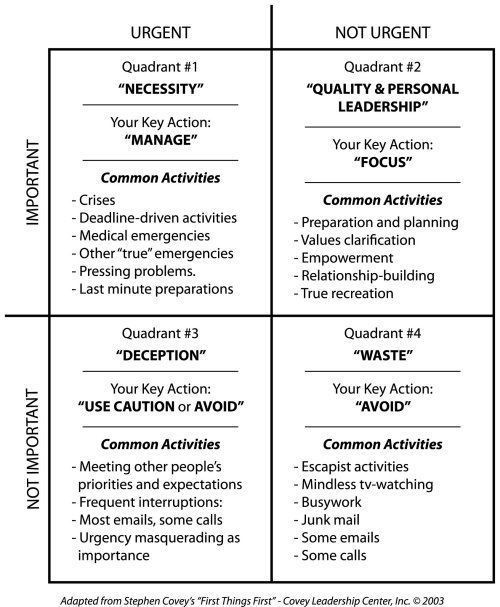
Similar to Stephen Covey’s “urgent and important matrix” there are common activities that need to be done.
Should your organization’s “common activities” be changing?
#ceos #leadership #urgent #important
































 Davak Systems & Technology
You must be logged in to post a comment.