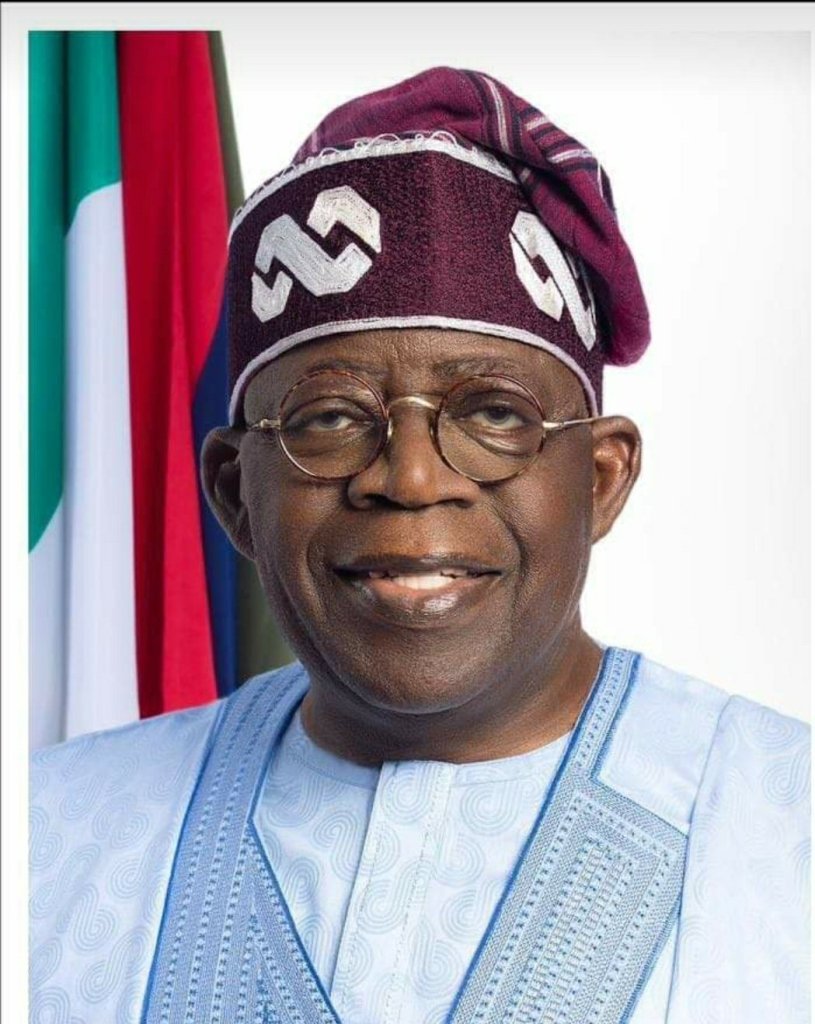
FIRST INAUGURAL ADDRESS BY PRESIDENT BOLA AHMED TINUBU 29 MAY 2023
THE NIGERIAN IDEAL
My Fellow Citizens,
I stand before you honoured to assume the sacred mandate you have given me. My love for this nation is abiding. My confidence in its people, unwavering. And my faith in God Almighty, absolute. I know that His hand shall provide the needed moral strength and clarity of purpose in those instances when we seem to have reached the limits of our human capacity.
This day is bold and majestic yet bright and full of spirit, as is our precious nation.
As a nation, we have long ago decided to march beyond the dimness of night into the open day of renewed national hope.
The question we now ask ourselves is whether to remain faithful to the work inherent in building a better society or retreat into the shadows of our unmet potential.
For me, there is but one answer. We are too great a nation and too grounded as a people to rob ourselves of our finest destiny.
This nation’s journey has been shaped by the prayers of millions, and the collective sacrifices of us all.
We have endured hardships that would have made other societies crumble.
Yet, we have shouldered the heavy burden to arrive at this SUBLIME moment where the prospect of a better future merges with our improved capacity to create that future.
To the surprise of many but not to ourselves, we have more firmly established this land as a democracy in both word and deed.
The peaceful transition from one government to another is now our political tradition. This handover symbolizes our trust in God, our enduring faith in representative governance and our belief in our ability to reshape this nation into the society it was always meant to be.
Here, permit me to say a few words to my predecessor, President Muhammadu Buhari. Mr President, you have been an honest, patriotic leader who has done his best for the nation you love. On a more personal note, you are a worthy partner and friend. May History be kind to you.
For many years, Nigeria’s critics have trafficked the rumour that our nation will break apart, even perish.
Yet here we are. We have stumbled at times, but our resilience and diversity have kept us going.
Our burdens may make us bend at times, but they shall never break us.
Instead, we stand forth as Africa’s most populous nation and as the best hope and strongest champion of the Black Race.
As citizens, we declare as one unified people devoted to one unified national cause, that as long as this world exists, NIGERIA SHALL EXIST.
Today, Fate and Destiny join together to place the torch of human progress in our very hands. We dare not let it slip.
We lift high this torch so that it might shine on every household and in every heart that calls itself Nigerian. We hold this beam aloft because it lights our path with compassion, brotherhood, and peace. May this great light never EXTINGUISH.
Our administration shall govern on your behalf but never rule over you. We shall consult and dialogue but never dictate. We shall reach out to all but never put down a single person for holding views contrary to our own.
We are here to further mend and heal this nation, not tear and injure it.
In this vein, may I offer a few comments regarding the election that brought us to this juncture. It was a hard fought contest. And it was also fairly won. Since the advent of the Fourth Republic, Nigeria has not held an election of better quality.
The outcome reflected the will of the people. However, my victory does not render me any more Nigerian than my opponents. Nor does it render them any less patriotic.
They shall forever be my fellow compatriots. And I will treat them as such. They represent important constituencies and concerns that wisdom dare not ignore.
They have taken their concerns to court. Seeking legal redress is their right and I fully defend their exercise of this right. This is the essence of the rule of law.
Over six decades ago, our founding fathers gave bravely of themselves to place Nigeria on the map as an independent nation.
We must never allow the labor of those who came before us to wither in vain but to blossom and bring forth a better reality.
Let us take the next great step in the journey they began and believed in.
Today, let us recommit our very selves to placing Nigeria in our hearts as the indispensable home for each and every one of us regardless of creed, ethnicity, or place of birth.
My supporters, I thank you. To those who voted otherwise, I extend my hand across the political divide. I ask you to grasp it in national affinity and brotherhood. For me, political coloration has faded away. All I see are Nigerians.
May we uphold these fitting and excellent notions as the new Nigerian ideal.
My fellow compatriots,
The Nigerian ideal which I speak of is more than just an improvement in economic and other statistics. These things are important; but they can never convey the fullness of our story.
Our mission is to improve our way of life in a manner that nurtures our humanity, encourages compassion toward one another, and duly rewards our collective effort to resolve the social ills that seek to divide us.
Our constitution and laws give us a nation on paper. We must work harder at bringing these noble documents to life by strengthening the bonds of economic collaboration, social cohesion, and cultural understanding. Let us develop a shared sense of fairness and equity.
The South must not only seek good for itself but must understand that its interests are served when good comes to the North. The North must see the South likewise.
Whether from the winding creeks of the Niger Delta, the vastness of the northern savannah, the boardrooms of Lagos, the bustling capital of Abuja, or the busy markets of Onitsha, you are all my people. As your president, I shall serve with prejudice toward none but compassion and amity towards all.
In the coming days and weeks, my team will publicly detail key aspects of our programme. Today, permit me to outline in broad terms a few initiatives that define our concept of progressive good governance in furtherance of the Nigerian ideal:
The principles that will guide our administration are simple:
Nigeria will be impartially governed according to the constitution and the rule of law.
We shall defend the nation from terror and all forms of criminality that threaten the peace and stability of our country and our subregion.
We shall remodel our economy to bring about growth and development through job creation, food security and an end of extreme poverty.
In our administration, Women and youth will feature prominently.
Our government will continue to take proactive steps such as championing a credit culture to discourage corruption while strengthening the effectiveness and efficiency of the various anti-corruption agencies.
SECURITY
Security shall be the top priority of our administration because neither prosperity nor justice can prevail amidst insecurity and violence.
To effectively tackle this menace, we shall reform both our security DOCTRINE and its ARCHITECTURE.
We shall invest more in our security personnel, and this means more than an increase in number. We shall provide, better training, equipment, pay and firepower.
THE ECONOMY
On the economy, we target a higher GDP growth and to significantly reduce unemployment.
We intend to accomplish this by taking the following steps:
First, budgetary reform stimulating the economy without engendering inflation will be instituted.
Second, industrial policy will utilize the full range of fiscal measures to promote domestic manufacturing and lessen import dependency.
Third, electricity will become more accessible and affordable to businesses and homes alike. Power generation should nearly double and transmission and distribution networks improved. We will encourage states to develop local sources as well.
I have a message for our investors, local and foreign: our government shall review all their complaints about multiple taxation and various anti-investment inhibitions.
We shall ensure that investors and foreign businesses repatriate their hard earned dividends and profits home.
JOBS
My administration must create meaningful opportunities for our youth. We shall honour our campaign commitment of one million new jobs in the digital economy.
Our government also shall work with the National Assembly to fashion an omnibus Jobs and Prosperity bill. This bill will give our administration the policy space to embark on labour-intensive infrastructural improvements, encourage light industry and provide improved social services for the poor, elderly and vulnerable.
Agriculture
Rural incomes shall be secured by commodity exchange boards guaranteeing minimal prices for certain crops and animal products. A nationwide programme for storage and other facilities to reduce spoilage and waste will be undertaken.
Agricultural hubs will be created throughout the nation to increase production and engage in value-added processing. The livestock sector will be introduced to best modern practices and steps taken to minimize the perennial conflict over land and water resources in this sector.
Through these actions, food shall be made more abundant yet less costly. Farmers shall earn more while the average Nigerian pays less.
INFRASTRUCTURE
We shall continue the efforts of the Buhari administration on infrastructure. Progress toward national networks of roads, rail and ports shall get priority attention.
FUEL SUBSIDY
We commend the decision of the outgoing administration in phasing out the petrol subsidy regime which has increasingly favoured the rich more than the poor. Subsidy can no longer justify its ever-increasing costs in the wake of drying resources. We shall instead re-channel the funds into better investment in public infrastructure, education, health care and jobs that will materially improve the lives of millions.
MONETARY POLICY
Monetary policy needs thorough housecleaning. The Central Bank must work towards a unified exchange rate. This will direct funds away from arbitrage into meaningful investment in the plant, equipment and jobs that power the real economy.
Interest rates need to be reduced to increase investment and consumer purchasing in ways that sustain the economy at a higher level.
Whatever merits it had in concept, the currency swap was too harshly applied by the CBN given the number of unbanked Nigerians. The policy shall be reviewed. In the meantime, my administration will treat both currencies as legal tender.
FOREIGN POLICY
Given the world in which we reside, please permit a few comments regarding foreign policy.
The crisis in Sudan and the turn from democracy by several nations in our immediate neighbourhood are of pressing concern.
As such, my primary foreign policy objective must be the peace and stability of the West African subregion and the African continent. We shall work with ECOWAS, the AU and willing partners in the international community to end extant conflicts and to resolve new ones.
As we contain threats to peace, we shall also retool our foreign policy to more actively lead the regional and continental quest for collective prosperity.
Conclusion
This is the proudest day of my life. But this day does not belong to me. It belongs to you, the people of Nigeria.
On this day, Nigeria affirms its rightful place among the world’s great democracies. There, Nigeria shall reside forever.
The course of our past and the promise of the future have brought us to this exceptional moment.
In this spirit, I ask you to join me in making Nigeria a more perfect nation and democracy such that the Nigerian ideal becomes and forever remains the Nigerian reality.
With full confidence in our ability, I declare that these things are within our proximate reach because my name is Bola Ahmed Tinubu, and I am the President of the Federal Republic of Nigeria.
May God bless you and May He bless our beloved land.
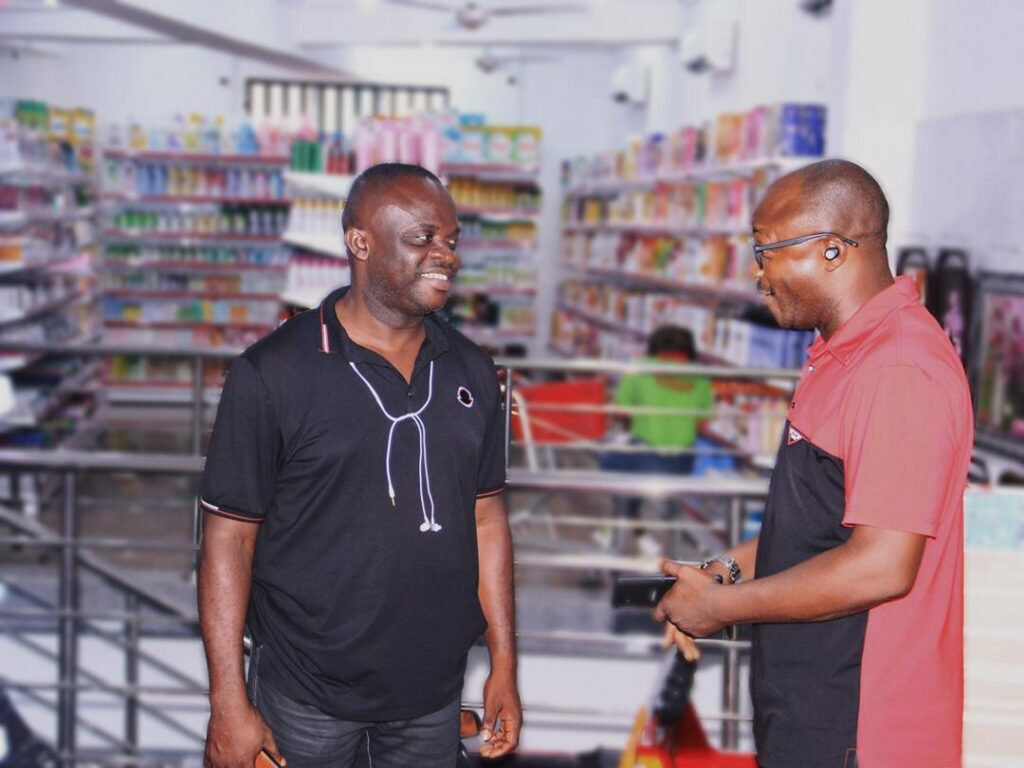
Retail stores in Nigeria can vary widely in size and appearance, depending on the type of store and its location. In urban areas, modern retail stores may resemble those found in other parts of the world, with clean, well-lit interiors and organized product displays. Some of the most popular retail stores in Nigeria include supermarkets, department stores, and specialty stores that sell a wide range of products.
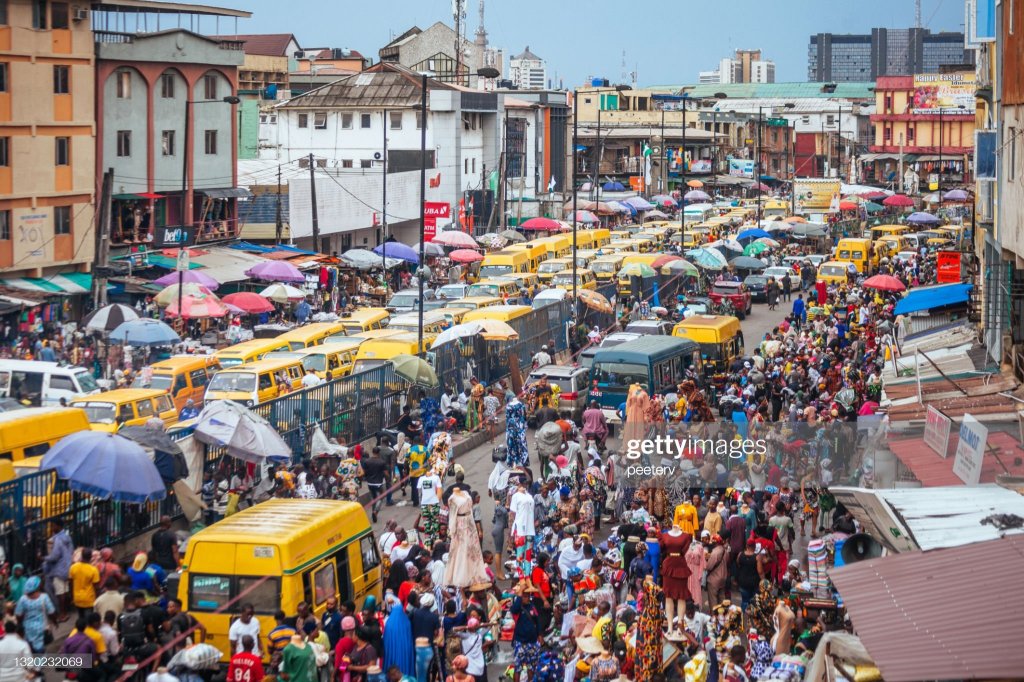
In more rural areas, retail stores may take on a more traditional appearance, with simple stalls or shops selling basic goods such as food, clothing, and household items. These stores may be located in open-air markets or along busy streets.
The retail industry in Nigeria has been experiencing significant growth over the past few years due to various factors such as urbanization, a growing middle class, and the increasing adoption of technology. According to a report by the Nigeria Retail Outlook, the retail industry in Nigeria was valued at US$125 billion in 2019 and is expected to grow to US$388 billion by 2024.
In terms of changes in retail stores specifically, there has been a shift towards e-commerce and online shopping in Nigeria, with more consumers preferring to shop online due to convenience and safety concerns. This has led to the emergence of new online retail stores and marketplaces, such as Jumia and Konga, which have gained significant market share in recent years.
However, traditional brick-and-mortar retail stores still remain important in Nigeria, particularly in urban areas. In recent years, there has also been a trend towards modernization and upgrading of traditional retail stores, with the introduction of new technologies and more sophisticated store formats to enhance the shopping experience for consumers.
Overall, retail stores in Nigeria reflect the diversity and vibrancy of the country’s culture and economy. They offer a wide range of products and services to meet the needs of Nigerian consumers, from everyday necessities to luxury goods.
The retail industry in Nigeria has experienced some challenges due to the COVID-19 pandemic, it remains a key contributor to the country’s economy and is expected to continue growing in the coming years.
The Relevance of Processes in the Retail Business
Retail processes play a crucial role in enhancing growth and development in the retail industry. These processes are designed to help retailers efficiently manage their operations, optimize their resources, and provide a seamless shopping experience for customers. Here are some ways in which retail processes can enhance growth and development in the industry:
Improved Inventory Management: Effective inventory management is essential for retailers to ensure they have the right products in stock at the right time. This helps to minimize stockouts, reduce wastage and improve cash flow. By implementing processes such as automated inventory tracking and demand forecasting, retailers can optimize their inventory levels and improve their profitability.
Efficient Supply Chain Management: Retailers need to have efficient supply chain processes to ensure they receive products on time and at the right price. By implementing processes such as supplier management, demand planning, and transportation management, retailers can streamline their supply chain operations, reduce lead times and improve their responsiveness to customer demands.
Customer Relationship Management: Customer satisfaction is essential for the growth and development of retail businesses. By implementing customer relationship management (CRM) processes, retailers can better understand their customers’ needs, preferences, and behaviors. This information can then be used to tailor their marketing efforts and improve the overall shopping experience.
Seamless Payment Processes: Retailers need to provide their customers with convenient and secure payment options to encourage repeat purchases. By implementing seamless payment processes such as mobile payments and online payment gateways, retailers can reduce transaction times, increase customer satisfaction, and enhance their overall brand image.
Data Analytics: Retailers can leverage data analytics to gain insights into their business operations, customer behavior, and market trends. By analyzing this data, retailers can make informed decisions, optimize their resources, and enhance their overall performance.
The relevance of Automation in the Retail Business
Automation is becoming increasingly relevant in the retail business today as it can help retailers streamline their operations, reduce costs, and improve efficiency. Here are some key areas where automation is being used in the retail industry:
Inventory Management: Automated inventory management systems can help retailers optimize their inventory levels, reduce stockouts, and improve their cash flow. These systems use algorithms to predict demand and automatically reorder products when inventory levels fall below a certain threshold. This helps retailers avoid overstocking or understocking, reducing waste and increasing profitability.
Supply Chain Management: Automation can help retailers streamline their supply chain operations, reducing lead times and improving responsiveness to customer demands. Automated systems can track orders, manage shipping, and update inventory levels in real-time, making it easier for retailers to manage their logistics.
Customer Service: Automated chatbots and virtual assistants can help retailers improve their customer service by providing 24/7 support, answering frequently asked questions, and resolving customer issues quickly. This can help reduce wait times, improve customer satisfaction, and free up staff to focus on more complex tasks.
Point of Sale (POS) Systems: Automated POS systems can help retailers process transactions faster and more accurately, reducing the risk of errors and improving efficiency. These systems can also provide real-time sales data, enabling retailers to make informed decisions about pricing and inventory management.
Data Analysis: Automated data analysis tools can help retailers make sense of large amounts of data, identifying trends and patterns that can inform business decisions. These tools can help retailers optimize their marketing efforts, improve customer retention, and identify opportunities for growth.
Automation is becoming increasingly relevant in the retail business as it can help retailers improve their operations, reduce costs, and enhance their customer experience. By automating inventory management, supply chain management, customer service, point of sale systems, and data analysis, retailers can stay competitive in an ever-changing retail landscape.
The Effective Management of Retail Store in Nigeria
Effective management of a retail store in Nigeria requires a combination of skills and strategies to ensure that the store is successful and profitable. Here are some key strategies for effective management of a retail store in Nigeria:
Strong Leadership: A successful retail store requires strong leadership, with a clear vision and effective communication with employees. Managers need to set clear expectations and goals for their teams, while providing guidance and support to help employees achieve their targets.
Efficient Operations: Retail stores need to be well-organized and efficient in their operations, with streamlined processes for inventory management, supply chain management, and customer service. Managers need to implement effective systems and processes that can help improve efficiency and reduce costs.
Customer Service: Providing exceptional customer service is critical to the success of a retail store. Managers need to ensure that their employees are well-trained and knowledgeable about the products and services they offer, and are able to respond quickly and effectively to customer inquiries and complaints.
Merchandising: Effective merchandising is key to attracting customers and increasing sales. Managers need to ensure that their store layout, product displays, and pricing strategies are optimized to appeal to their target market and encourage customer purchases.
Marketing and Promotions: Effective marketing and promotions are essential to drive traffic to a retail store and increase sales. Managers need to implement effective marketing campaigns that target their ideal customer base and offer promotions and incentives to encourage repeat purchases.
Financial Management: Effective financial management is critical to the success of a retail store. Managers need to ensure that their store is profitable by closely monitoring costs and revenues, managing cash flow, and setting realistic financial goals.
The cost of setting up a retail business in Nigeria can vary widely depending on the size and type of business, location, and other factors. The cost can range from several hundred thousand naira to several million naira depending on the size and type of business. It’s important to carefully consider all costs involved and create a detailed business plan to ensure that the business is viable and profitable.
However, here are some key factors to consider when estimating the cost of setting up a retail business in Nigeria:
Legal and Regulatory Costs: Setting up a retail business in Nigeria requires registering the business with the Corporate Affairs Commission (CAC) and obtaining necessary licenses and permits. The cost of legal and regulatory compliance can vary depending on the type of business and location.
Premises and Infrastructure: The cost of renting or leasing a retail space in Nigeria can vary widely depending on the location and size of the space. In addition to rent, other costs may include renovation and decoration of the premises, utilities, and security.
Inventory and Equipment: The cost of inventory and equipment can also vary widely depending on the type of retail business. For example, a grocery store will require a different inventory and equipment setup compared to a fashion boutique. The cost of inventory and equipment will also depend on the size of the store and the quality of products being sold.
Marketing and Advertising: The cost of marketing and advertising can be a significant factor in the cost of setting up a retail business in Nigeria. This may include the cost of creating a brand identity, creating a website, advertising in local media, and social media advertising.
Staffing Costs: Hiring employees and paying for salaries, benefits, and training can be a significant cost in setting up a retail business in Nigeria.
In summary, a total retail opportunity offers significant potential for retailers to capture a large and growing market by providing a comprehensive retail experience that meets the diverse needs and preferences of consumers. By investing in their supply chain, inventory management, logistics, customer service, and technology, retailers can create a competitive advantage and drive growth and profitability in the retail sector.By implementing these strategies, managers can ensure that their store is successful and profitable in the Nigerian retail
This is an excerpt on Nigeria Retail Store published by Davak Systems and Technology. Connect with us via email: davaksystemstechnology@hotmail.com.



 Davak Systems & Technology
You must be logged in to post a comment.